A long time ago, when America was still capable of being shocked by an ice cube, a man named Wilson Bryan Key wrote a book called Subliminal Seduction.
He argued that advertisers were hiding naughty little messages in magazine ads and liquor layouts—tiny visual smirks tucked below the threshold of awareness.
If you stared hard enough at a bottle, a lipstick ad, or a cluster of melting cubes, you might discover that the Republic had been quietly undermined by the word SEX.
This was troubling, especially to people who had already survived wars, recessions, root canals, and polyester, only to learn that the final assault on civilization had come disguised as frozen typography.
The theory was irresistible.
It suggested that beneath every innocent ad there lurked a dirty little whisper. Somewhere in a cigarette cloud, a rumpled bedsheet, or the curve of a cocktail glass, Madison Avenue had hidden a coded message meant to bypass the conscious mind and slip directly into that basement workshop where appetite, vanity, insecurity, and desire sit around in their underwear making executive decisions.
Even people who doubted Key enjoyed him. There is something delicious about the idea that society is not being guided by reason, morality, or public discourse, but by the faint possibility of erotic lettering in a whiskey advertisement.
Compared to what came later, however, all that now seems almost sweet.
Because the modern world no longer needs to smuggle temptation into an ice cube.
It has your phone.
The old advertiser had to imply. The new one vibrates.
The old manipulator buried a hint in a glossy page and prayed your unconscious would notice.
The modern system sits in your pocket, glows in the dark, chirps, pings, pulses, flatters, alarms, rewards, nags, remembers your birthday, tracks your weather, measures your sleep, and interrupts your lunch because somewhere, somehow, a stranger has posted a photograph of soup.
A hidden word in an ad now looks almost gentlemanly.
Today the machinery of persuasion is not subliminal. It is relentless. It does not whisper once from a page. It taps you on the shoulder all day long.
It tells you that something has happened, might happen, nearly happened, or will happen if you would kindly click one more thing. What once required cunning now requires battery life.
And we respond beautifully.
A tiny sound emerges from our pocket and our head swivels with all the dignity of a pigeon spotting a bread crumb.
A screen lights up and entire populations fall silent.
At dinner tables, in airports, on sidewalks, in bed, at stoplights, at funerals, and during moments once reserved for prayer, digestion, romance, or staring nobly into the middle distance like a troubled cattleman, we now consult the glowing rectangle.
This is not because we are weak.
It is because we are human. Human beings have always been vulnerable to novelty, reward, warning, approval, gossip, and the thrilling possibility that somebody, somewhere, may be thinking about us for three and a half seconds.
The phone simply industrialized the process.
Wilson Bryan Key had to imagine a hidden seduction. We built one, charged it nightly, and invited it to sleep beside us like a beloved electronic ferret.
Which brings us, a touch awkwardly, to you.
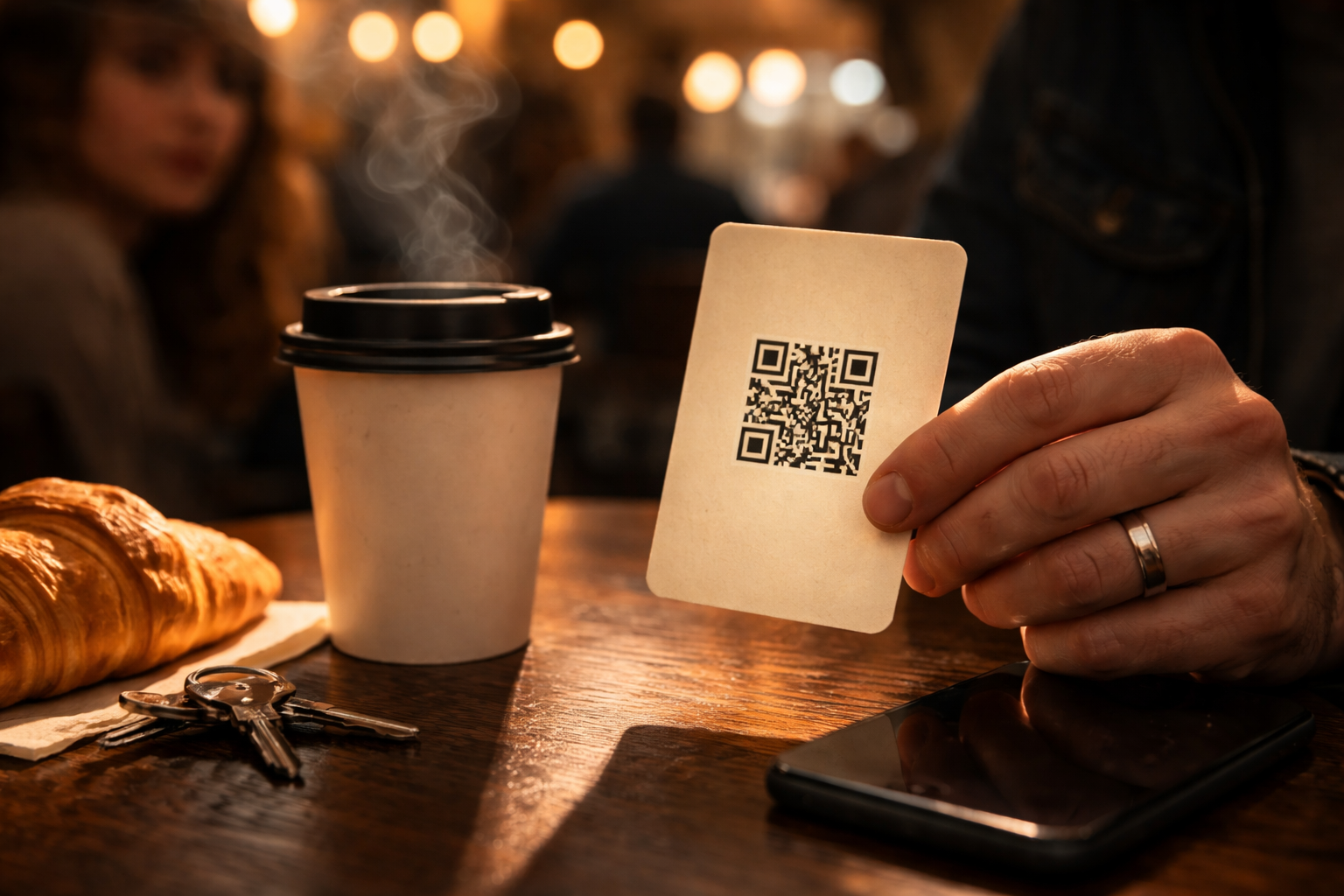
There is a fair chance you arrived here because a card gave you an instruction.
Perhaps it said:
Please do not scratch Card #1.
You appear to be holding Card #1.

That is not merely an instruction. It is a psychological crowbar.
You read it.
You paused.
You turned the card over.
You may have looked around.
You may even have smiled the smile of a citizen who has just discovered that an inanimate object is addressing him in the tone of a mildly superior clerk.
You may have been tempted to scratch it, sniff it, hold it to the light, or show it to somebody at the next table. Because the human mind is not merely curious.
It is aggressively, professionally, and at times embarrassingly curious. Tell us not to open a door and our hand is already on the knob. Tell us not to scratch Card #1 and half the population turns into raccoons.
So now the unpleasant part.
You were not merely reading about subliminal seduction.
You were participating in it.
Not the dark, cinematic version involving brainwashing, coded trigger words, and men in expensive suits muttering into orchids.
Nothing so grand.
Just the ordinary garden-variety seduction of attention: curiosity, suggestion, prohibition, mood, design, social contagion, and the ancient human need to know what the hell is going on.
A card made you pause.
A sentence made you feel singled out.
A joke made you complicit.
And once one person laughed, others leaned in, because laughter is social proof with better timing.
That is how persuasion works now.
Not always through hidden erotic lettering in ice cubes, but through the orchestration of impulse. A nudge here, a mystery there, a prohibition, a reward, a vibration, a headline, a red dot, a whispered look at this.
The old fear was that someone might smuggle the word SEX into an ad.
The modern reality is that entire industries have learned how to smuggle themselves into our habits.
If this sounds grim, cheer up.
Manipulation is not the whole story.
Curiosity is also how we find books, music, jokes, ideas, lovers, recipes, scams, old friends, and the occasional worthwhile stranger.
The same mind that falls for nonsense is also the mind that discovers wonder.
The trick, as always, is to notice when you are being played—and to admire the workmanship when the game is at least entertaining.
If you have made it this far, congratulations. You have survived one more small ambush of the senses.
And now that you know how the trick works, here are a few other traps I have laid for innocent passersby:
Breakfast with Walt
A true story about breakfast, Disney, disappointment, and the odd things that linger after the eggs are gone.
Nothing Happened in Coronation
A small-town title that lies shamelessly and with feeling.
More Curious Thoughts
A growing collection of stories, essays, observations, and other carefully arranged disturbances.
If you feel the urge to forward this piece to a friend, that is perfectly understandable.
The oldest seduction of all may be the pleasure of saying, This got me. It may get you too.
