The Subscription That Wouldn’t Die
For at least two years, possibly longer, a company I barely remembered was charging my credit card.
Not aggressively. Not loudly. Just… faithfully.
The company is called 10Web. I’m sure it provides something useful to someone. Perhaps to many someones. But to me it had become one of those modern relationships in which one party has moved on emotionally while the other continues to bill monthly.
I had not stormed out. I had not slammed a door. I had simply drifted away, as people do. Yet the charges kept arriving with a kind of serene corporate faith. Somewhere, deep in the circuitry, I remained a valued customer. Or at least a valid card number.
Eventually I did what every responsible citizen of the digital age must do: I searched old emails, squinted at credit card statements, and tried to remember whether I had ever knowingly invited this enterprise into my life. The answer was lost in the fog of passwords, expired logins, and noble intentions from years gone by.
Still, I persisted. A note was sent. Polite but firm. The sort of note one writes to a company when one wishes to sound civilized while also conveying the faint possibility of torch-bearing villagers.
Then came their reply.
Your subscription has been canceled.
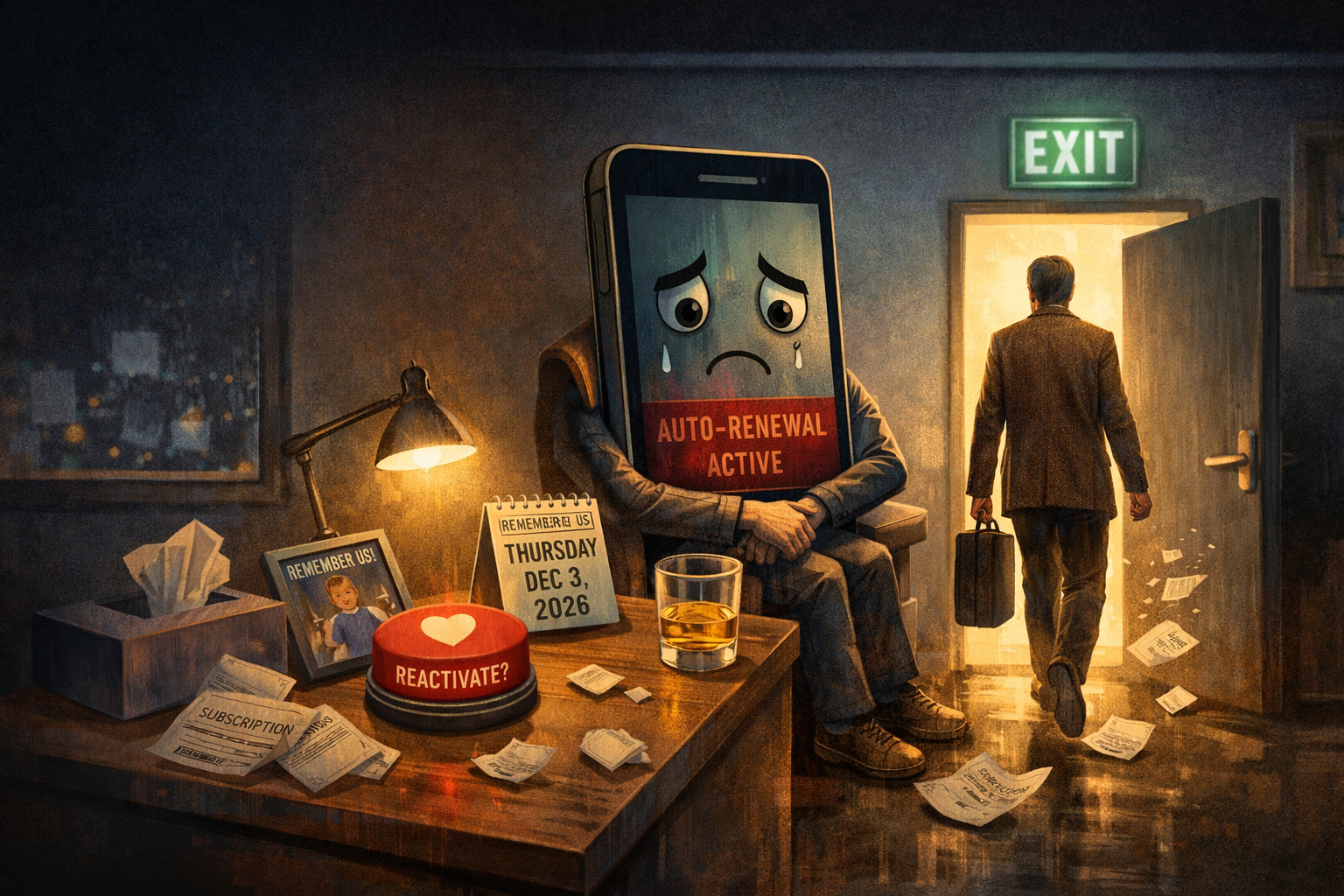
Just like that. Calm, brief, and almost tender. They even added that I could continue enjoying my subscription until Thursday, December 3, 2026. This struck me as generous in the same way a kidnapper might offer dessert on the final evening.
They also reassured me that if I changed my mind, I could easily reactivate the plan. That was thoughtful. Few breakups end with such optimism from the party that had been taking your money automatically.
The whole thing stirred a memory. Three or four years ago, Citi allowed a similarly mysterious charge to blossom on my account. On that occasion I wrote directly to the CEO. Miraculously, one year of charges was returned. Apparently somewhere in the upper reaches of American banking there remains a lonely soul who can still be moved by facts, persistence, and the scent of impending annoyance.
There is something admirable about a system that continues billing long after interest, memory, and usefulness have departed. It suggests a level of commitment most relationships never achieve.
I didn’t cancel the subscription. I escaped it.
So now I face the modern citizen’s fork in the road. Do I call Citi and make certain no further charges rise from the grave? Or do I write an exposé, or perhaps a humorous essay, about the strange new economy in which subscriptions linger long after affection, memory, and usefulness have departed?
The sensible answer is probably both.
I will likely call Citi. It is never wise to underestimate the survival instincts of a recurring charge. But I also feel a duty to literature. These companies have given us a new genre: the subscription gothic. In these tales, nothing is entirely dead, every login leads to a cul-de-sac, and somewhere in the darkness a cheerful auto-renewal waits patiently for your next statement cycle.
To be fair, I may have signed up with the best of intentions and simply forgot. That is the modern way. We subscribe in a burst of optimism and unsubscribe in a fog of archaeology.
To be fair again, 10Web did eventually let me go. For that I thank them. I bear no grudge. I only hope they will understand if I do not rush back into their arms.
PLAN B …. A Brief Note to the CEO
Dear Tigran Nazaryan,
It appears we have been in a long-term financial relationship—one of us more aware of it than the other.
I say “appears” because, like many modern romances, it existed primarily on my credit card statement. You, on the other hand, seemed fully committed.
For at least two years, possibly longer, your company charged me with admirable consistency. I can only assume this was powered by cutting-edge automation, a belief in recurring revenue, and a touching faith that I might one day remember why I signed up.
I recently canceled. Your team handled it with efficiency and grace, which I genuinely appreciate. The tone of the farewell email suggested I might return someday. I admire that optimism.
Still, I wanted to reach out personally, not in anger, but in curiosity.
At what point does a subscription become less a service and more a ghost? Something that lingers quietly, unseen, until a careful review of bank statements reveals its continued presence?
This is not a complaint so much as an observation about the age we now inhabit. One in which products are invisible, relationships are automated, and billing is eternal.
If nothing else, you have provided me with a story. For that, I thank you. With luck it will be read by thousands when it goes viral.
Warm regards,
Jaron Summers
P.S. If I return, I trust you will recognize me immediately. Your billing system always has.
