
The Death of Diesel—and the Plant That Could
Make Alberta Rich Again
When Rudolf Diesel disappeared from a steamship crossing the English Channel in September of 1913, the world lost one of its great inventors.
His body was eventually recovered from the North Sea.
What almost vanished with him was an even bigger idea.
Most people assume Diesel invented an engine that was meant to run on petroleum.
He didn’t.
He imagined something far more revolutionary.
Diesel believed farmers would one day grow their own fuel.
More than a century later, I can’t help wondering whether Alberta has forgotten his dream.
At the 1900 World’s Fair in Paris, Diesel demonstrated one of his remarkable engines running on peanut oil.
He wasn’t trying to make a political statement.
He was trying to make farmers independent.
Imagine harvesting your own crop, pressing the oil, and using it to power your tractor.
Instead of buying fuel from someone else, your own fields would provide it.
Diesel believed agriculture and energy belonged together.
Then history took a different turn.
Cheap petroleum flooded the market.
Oil fields were discovered.
Refineries became larger.
Engines were optimized for petroleum diesel.
The dream of the self-powered farm slowly disappeared beneath a river of crude oil.
Nobody benefited from that river more than Alberta.
Oil transformed this province.
It built schools.
Hospitals.
Roads.
Universities.
Entire cities.
Millions of Albertans owe their livelihoods directly or indirectly to the energy industry.
That deserves respect.
But every successful industry eventually asks the same question:
What’s next?
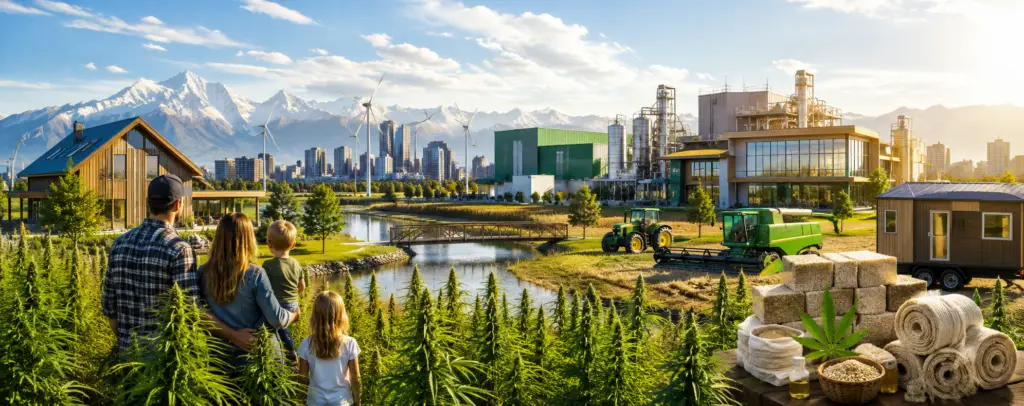
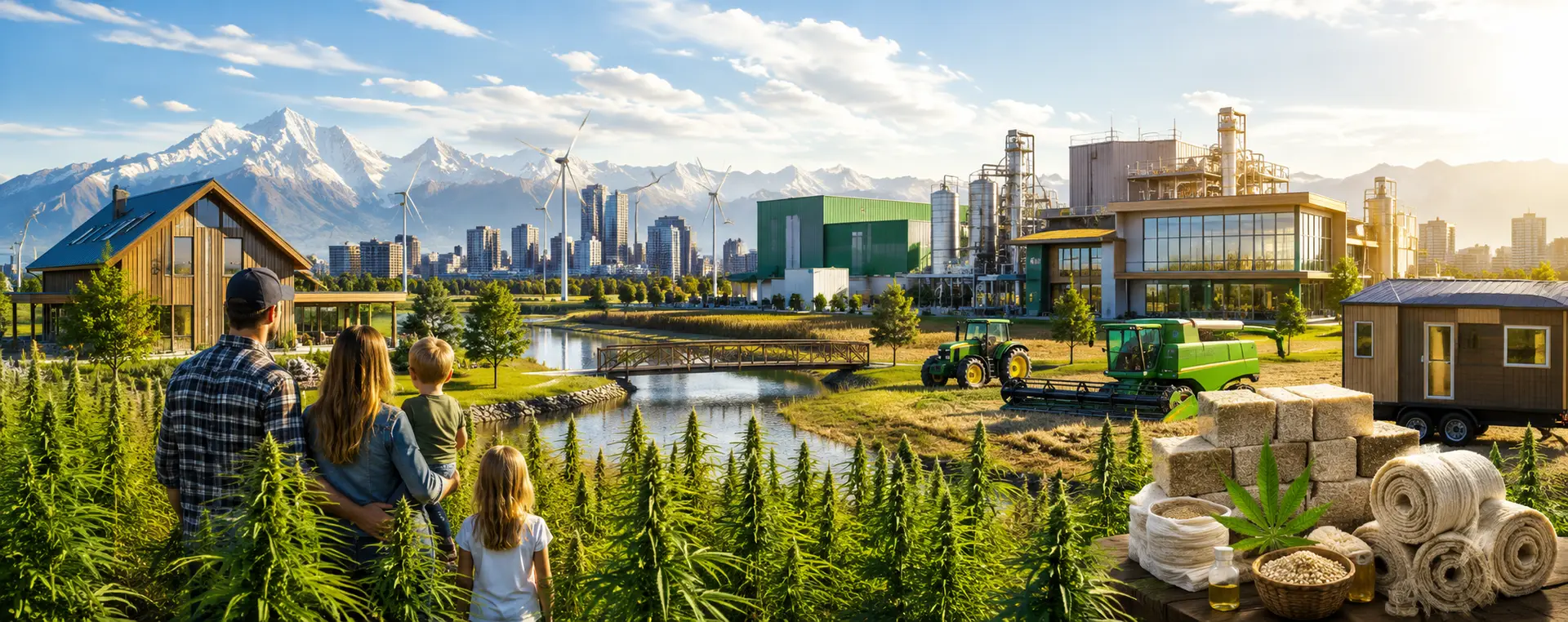
Perhaps one answer is growing quietly in Alberta’s fields.
Industrial hemp.
Most people hear the word and immediately think of something entirely different.
That is unfortunate because industrial hemp may be one of the most versatile crops on Earth.
It can become rope.
Fabric.
Paper.
Insulation.
Building materials.
Animal bedding.
Food.
Cooking oil.
Bioplastics.
Composite panels.
Thousands of products begin with one remarkably ordinary-looking plant.
And yes…
Its oils can also become fuel.
Now imagine Alberta through Rudolf Diesel’s eyes.
Millions of acres of productive farmland.
Some of the world’s best farmers.
Outstanding agricultural research.
The University of Alberta.
InnoTech Alberta.
A province already experienced in producing energy.
Instead of asking only how to extract energy from beneath the ground, perhaps we should also ask how to harvest more of it from above the ground.
Could every farmer fuel every tractor with hemp?
Probably not.
The economics are more complicated than that.
Processing costs matter.
Competing fuels matter.
Crop yields matter.
Modern diesel fuel has advantages that cannot simply be wished away.
But the larger idea remains surprisingly powerful.
Why shouldn’t farms produce at least some of the energy they consume?
Why shouldn’t rural communities own more of the value they create?
Those questions are worth asking.
The real opportunity may be even larger than fuel.
Fuel is consumed once.
A hemp fibre can become a house.
A biodegradable plastic.
A car panel.
A textile.
A bridge between agriculture and manufacturing.
Instead of exporting raw crops, Alberta could increasingly export finished products.
That means jobs.
Factories.
Research.
Investment.
Young people finding careers without leaving small towns.
The greatest obstacle isn’t growing hemp.
Alberta farmers already know how to grow crops.
The challenge is everything that comes afterward.
Processing plants.
Manufacturing.
Investment.
Markets.
Those are engineering and business problems.
And Albertans have solved problems far more difficult than those before.
Sometimes history gives us a second chance.
Rudolf Diesel imagined a world where farmers were not simply food producers.
They were energy producers.
He imagined fields that fed families, powered machinery, and strengthened rural economies.
Perhaps he was simply a century ahead of his time.
As Alberta searches for the next chapter in its remarkable story, maybe we should remember the inventor whose greatest dream wasn’t just a better engine.
It was giving ordinary people more control over their own future.
The next Alberta boom may not come from abandoning oil.
Nor will it come from pretending one crop can solve every problem.
But somewhere between the oil well and the wheat field lies an idea that Rudolf Diesel understood long ago:
Sometimes the greatest source of energy isn’t hidden beneath our feet.
Sometimes it’s growing right in front of us.
And yes, I realize Hemp can contribute to biofuel production, but today it is generally more valuable economically as a source of fibre, seed, food products, and industrial materials than as a fuel crop. Look what men without moustaches are up to.