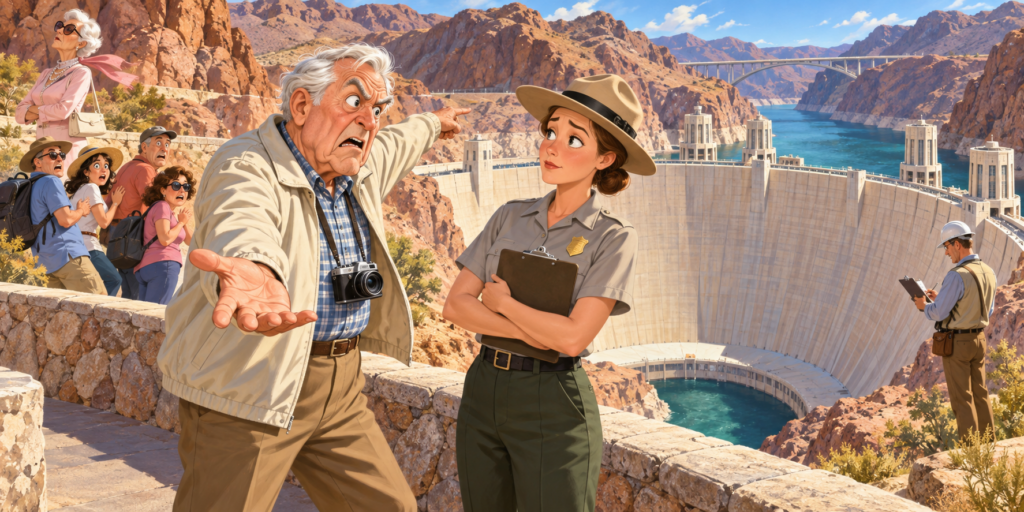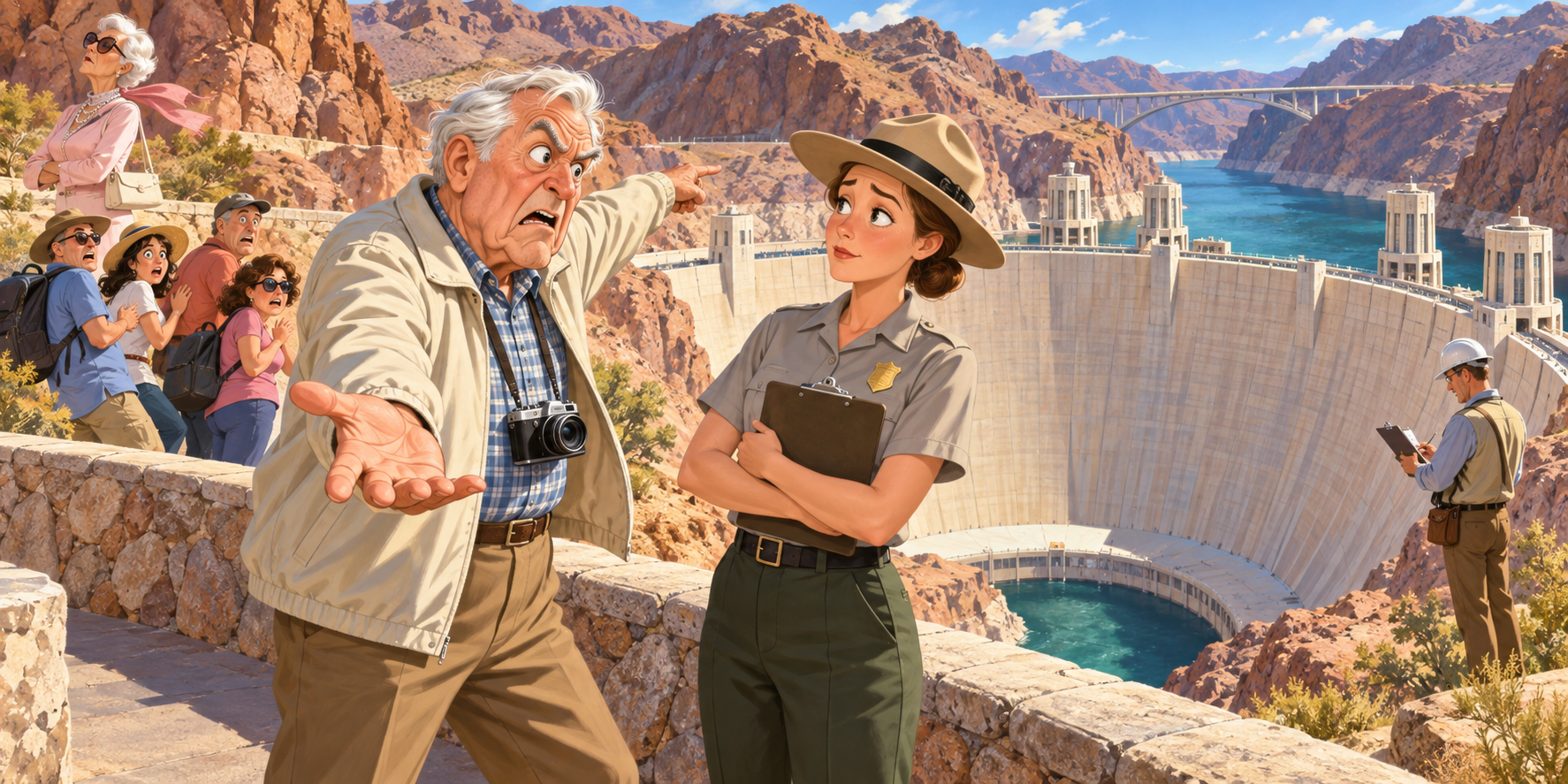

I recently visited Hoover Dam, one of the great engineering achievements of the twentieth century. At least that is what they tell tourists.
Our guide explained that the dam contains enough concrete to build a highway across the United States. He also mentioned that if all that concrete had been poured in one enormous block, it would have taken approximately 125 years to cool properly.
I stopped him.
“Are you telling us this dam is not finished?”
He explained that this wasn’t quite what he meant.
“It has been sitting here since 1935,” I said. “You have had more than ninety years to finish it. What have you people been doing?”
He said the dam had been built in smaller interlocking sections. Miles of pipes had been embedded in the concrete, and refrigerated water had been pumped through them to remove the heat created as the concrete cured.
This sounded suspiciously like the sort of explanation contractors give when they want another cheque.
“So the concrete is still setting?”
“No,” he said patiently. “The concrete set many years ago.”
“But you just said it could take 125 years.”
“That would have happened only if they had poured it as one enormous block.”
I looked up at several million tons of concrete hanging over us.
“And they didn’t pour it in one block?”
“No.”
“So it is being held together by a lot of smaller blocks?”
“In a manner of speaking.”
I asked everyone in our group to begin moving toward higher ground.
The guide assured us Hoover Dam was perfectly safe. I have heard similar assurances about airline food, government pensions and extended automobile warranties.
I asked who was in charge.
“The Bureau of Reclamation,” he said.
That did not inspire confidence. If a government department has the word reclamation in its name, it sounds as though it expects to lose something.
Perhaps Arizona.
I told the guide I wanted the taxpayers’ money returned.
He asked how much I had personally contributed toward construction of Hoover Dam.
“That is beside the point,” I said. “I am a taxpayer. This thing was built with taxpayers’ money. It is apparently still drying, it contains thousands of joints, and it might fall apart at any second.”
“It will not fall apart.”
“Then why are you constantly inspecting it?”
“To make sure it remains safe.”
“Exactly. If you were sure, you wouldn’t have to keep checking.”
I could see that logic had trapped him.
He tried another approach. He explained that concrete continues undergoing extremely slow chemical changes for many years and may even gain strength over time.
This was worse than I thought.
“You mean the dam is changing?”
“Very gradually.”
“So you don’t know what it will eventually become?”
“It will remain a dam.”
“That is your opinion.”
By now, several tourists had backed away from me. Kate was pretending she had arrived on a different bus.
I asked the guide whether the government still had the original receipt. He said he didn’t know.
“Well, without a receipt, getting a refund may be difficult. But I would settle for store credit.”
He asked what I thought the government should do with the dam.
“Return it to the contractor.”
“The contractors completed the dam more than ninety years ago.”
“Then it is clearly outside the warranty. Someone should have noticed this sooner.”
The guide took a deep breath and explained the whole thing again. Had Hoover Dam been poured as one solid mass, it might have taken 125 years to cool. Instead, engineers built it in carefully designed sections and circulated chilled water through pipes in the concrete. The sections were then grouted together, creating an immensely strong structure.
In other words, the dam was not unfinished. It was ingeniously constructed.
I thanked him for clearing that up.
Then I asked whether the cooling pipes were still under warranty.
He looked toward the Colorado River as though considering whether he could throw me into it.
I left reassured that Hoover Dam was one of humanity’s greatest engineering accomplishments.
But I am keeping the receipt.