I was born in Calgary and ever since I’ve been a little kid I’ve been puzzled by the chuckwagon races. I went to my first Stampede about eighty years ago. A horse fell and some grown-ups shot the horse in the head.
The cowboy waved to the crowd. Everyone cheered him. Other grown-ups dragged the dead horse onto a truck and drove away.
I’m more or less grown up and horses are still being “put down” when they break their legs. (It’s expensive and tricky to set a horse’s leg and often the horse dies anyway.)
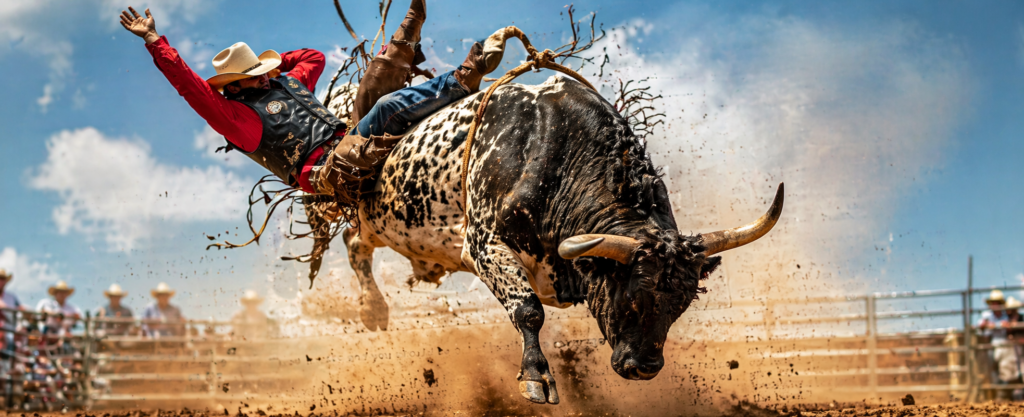
Rodeo cowboys, on the other hand, continue to break their legs (or skulls, or both) and no one puts them down. Cowboys just go to the hospital and get fixed up.
It’s hard to figure how many cowboys end up in the hospital. I’d guess about 98 per cent of them. Just listen to the rodeo announcer — he usually says something like, “…and here comes Tex, who’s coming off a real bad injury” or “here’s Tex, just got out of intensive care, that’s his doctor sitting on the fence. Nice of the doc to lug that big tank of oxygen here.”
Seems Tex spent the last three months in the hospital after a mean horse or bull “danced all over his chest.”
It’s hard to figure out what there’s more of — cowboys named Tex or cowboys who max out their Blue Cross. Tex’s medical bill costs Alberta taxpayers plenty.
I do not begrudge spending money on people who break their legs. But I think we should have a rule — if you keep entering the rodeo (doesn’t matter which event) and you keep breaking your bones, then after you do it for, say, the third time, you should pay to get fixed up with your own money. No fair the rest of us having to foot the bill for injuries you asked for.
You should also consider retraining for another field, perhaps bee raising or acupuncture. (A real smart cowboy could combine the two.)
I think we should have another rodeo rule. Even if you have the entry fee, you ought not to be allowed to participate with broken bones, partially healed ribs, or perforated lungs.
It might help if cowboys had their weight stamped on their shirts. Before an event officials could weigh them. If rodeo contestants seemed to have doubled in weight then they ought to be checked to see how many pounds of plaster of Paris they wrapped around themselves. If cowboys had more than 25 pounds of plaster, they could not compete that day.
The final rule relates to the first. After “accident three,” if you can’t pay for getting your broken bones or brain repaired, then a group of horses ought to get together and “put you down.” See how you like it.
I don’t know how cowboys feel about being put down by horses but I mentioned the notion to a retired chuckwagon mare the other day. The horse was named Jan, an old sway-back, clomping along Kelliher Road.
“I don’t think it would be a good idea if horses started ‘putting down’ cowboys,” said Old Jan. “Not our nature. We don’t whip humans until they stumble and injure themselves. Basically we are beasts of burden. We carry people around, run our hearts out at races and herd cattle.
“In the old days we pulled carts, wagons and plows to help make Canada into one of the best countries in the world.”
I asked Old Jan how she managed to get off the chuckwagon circuit.
“Slowed down,” said Old Jan. “Those cowboys did everything they could to make me pull faster, whipped me, terrified me — but I couldn’t pull any harder — I was plain tuckered out long before my time. Now I give kids rides for a loonie. Beats breaking a leg and getting a bullet in the head.”
“I’d always heard,” I said, “chuckwagon horses enjoyed their life.”
“You must have been talking to a cowboy; next time ask a horse.”