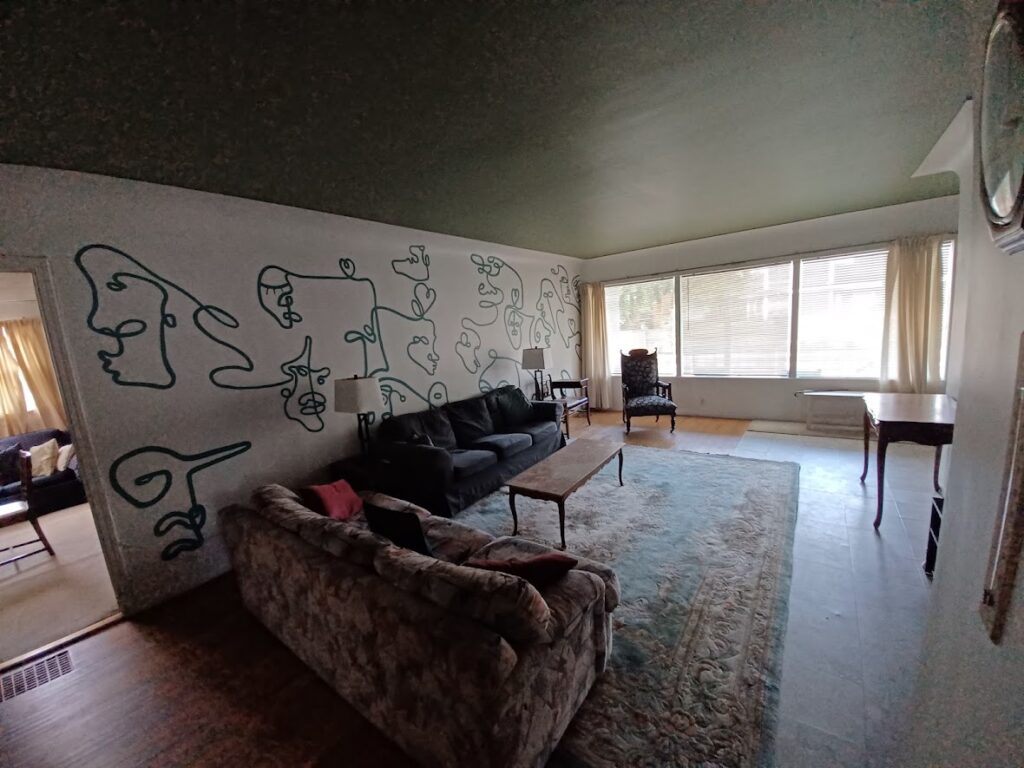

For the past thirty years, my wife Kate and I have rented rooms in our Edmonton house, mostly to graduate students at the University of Alberta.
My parents bought the house in 1961 for $17,000.00.
It has survived six decades, several generations of students, Edmonton winters, my attempts at home repair, and interior decorating decisions that probably should have required municipal approval.
Kate and I are now near 80, and every late summer we spend a few weeks getting the house ready for the next crop of graduate students.
The house sits right at the edge of the university campus. It has huge windows, old furniture, modern electronics, books, paintings, peculiar objects and approximately nothing from the current IKEA catalogue.
If you are looking for fifty shades of beige, we can save you the trouble.
Over the years, renting rooms has never exactly made us rich.
This year alone, Edmonton cheerfully relieved us of more than $8,000 in property taxes.
By the time we pay taxes and repairs, the rent almost covers the privilege of owning the place.
Almost.
But we have received something much better.
Friends.
Over thirty years, graduate students from all over the world have passed through our front door. Many stayed in touch. Some became lifelong friends.
So our problem has never been simply finding a renter.
We want to find our kind of renter.
For decades, however, we had a problem.
The south wall.
It was the first big wall prospective tenants saw when they came into the house.
And it was white.
Not elegant white.
Not Museum of Modern Art white.
Landlord white.
The sort of wall that says:
Nothing has happened here and nothing ever will.
Kate and I agreed the wall should make a statement.
We wanted someone walking through the front door to understand immediately that this was an old house with old-fashioned values, modern technology and owners who might be just a little peculiar.
Preferably the good kind of peculiar.
Eventually, I called an interior designer.
She was very sophisticated.
Possibly even snooty.
Or snotty.
There is a fine line in interior design.
I explained that I wanted something that might appeal to someone who appreciated Picasso.
“No problem,” she said.
She showed us wallpaper.
It was terrific.
Then she showed us the price.
$4,000.
For wallpaper.
Then came another little detail.
Hanging it would cost $2,000 more.
At that point I briefly considered hanging the interior designer instead.
Kate vetoed that.
Probably wisely.
So the $6,000 wall did not happen.
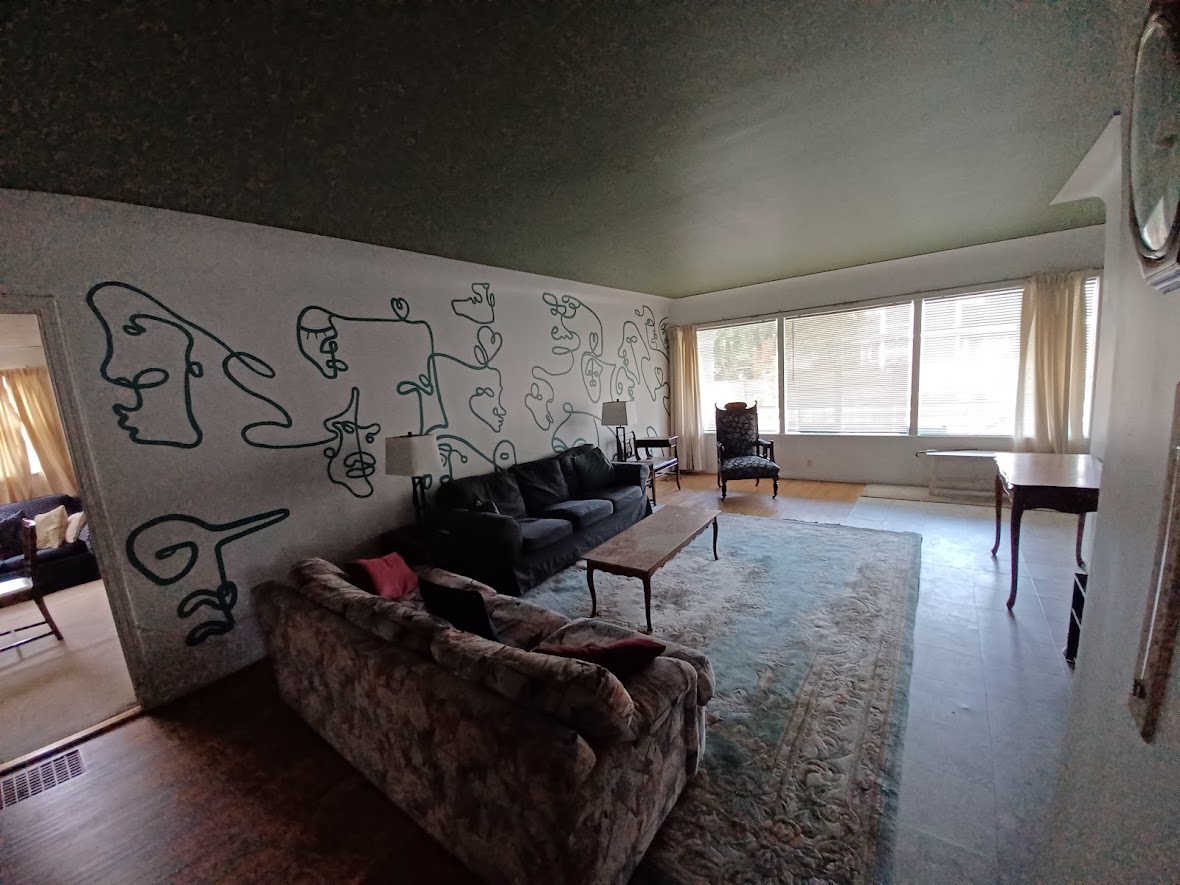
Instead, one of our tenants—who happened to be a genius with paint and graphics—created what you see in the photograph.
Cost?
About $400.
Saving?
$5,600.
But the wall turned out to have another purpose.
It hides the ceiling.
Some years earlier, another well-meaning tenant had discovered a can of green paint we’d left over from painting the patio.
He apparently looked at the can.
Then looked at our living-room ceiling.
And thought:
Obviously.
He painted the ceiling green.
This horrified Kate.
She immediately began a campaign to have me repaint it.
I assured her I would make things right.
Unfortunately, Kate had heard that particular sentence before.
Then our new wall went up.
And I noticed something remarkable.
Nobody looked at the ceiling anymore.
They walked into the room and stared at the wall.
So I devised a scientific experiment.
The next three prospective renters who came through the house and said they wanted to move in were given a test.
I asked each of them to look at the floor.
Then I asked:
“What color is the ceiling?”
Nobody knew.
Not one.
They had all walked directly underneath a large green ceiling without noticing it.
They were too busy looking at the wall.
This proved, at least to my satisfaction, that the ceiling was no longer green.
It was invisible.
I presented my findings to Kate.
She remains unconvinced.
Apparently marriage has a higher standard of peer review.
She still wants me to repaint the ceiling.
But I maintain that repainting something nobody can see would be fiscally irresponsible.
Today, when a prospective graduate student walks through our front door, I watch what happens.
If they stare at the wall and look worried, we may not be their house.
If they ask whether we’re going to paint over it, we are definitely not their house.
But if they walk in, stop, grin and say:
“That is fantastic!”
Ah.
There you are.
We may have found our next tenant.
Perhaps that’s why, after all these years, we usually have a waiting list.
We thought we were decorating a wall.
Instead, for $400, we got a work of art, a renter detector—and a remarkably effective way of pretending we don’t have a green ceiling.
Kate still wants it painted.
I told her I’ll take care of it.
She has heard that before.