My father was a dentist in Edmonton. Before that, we’d spent about a dozen years in Coronation, Alberta, pop. 950—a village where the future was less a mystery than a menu.
Most of the boys I grew up with didn’t wander far. They fell in love with a local girl, had a couple of kids, and made good money working as roughnecks in the booming oil fields. The others took over the family farm or ranch. It seemed like half the families were related to each other—hello, consanguinity.
I didn’t fancy the oil rigs. Too many of the locals came back injured—or didn’t come back at all.
There were three old guys who hung around the billiard hall. Each was missing his right thumb. They’d worked their way up to tool pushers, which was supposed to mean you survived long enough to give orders instead of take them. What it also meant was that when a drill collar weighing several tons decided to move, there went your thumb. Or your arm.
Saturday nights, they’d split a case of beer. About halfway through, one of them would say something—no one ever knew what—and the other two would slam their palms down on the counter so their knuckles touched. Their twelve fingers looked like some kind of starfish that needed a manicure.
They called themselves the No Thumbs Gang.
It was hard to argue with branding like that.
My parents decided to move—to Edmonton—where, they hoped, I might stumble into a university instead of a cautionary tale.
My father found work at the Charles Camsell Hospital… a place that served Indigenous patients from the Arctic. At the time, everyone around me called them “Eskimos,” including the patients themselves. Years later, government consultants explained that many were Inuit or Yupik—and that “Eskimo” had become an insult.
And then, like most government stories, things got complicated.
My father, however, had a way of cutting through complication with something much more interesting: a story.
He told me how clever the people of the far North were—living, as he put it, about as close to the Stone Age as any human beings left on earth. Not primitive. Just tested.
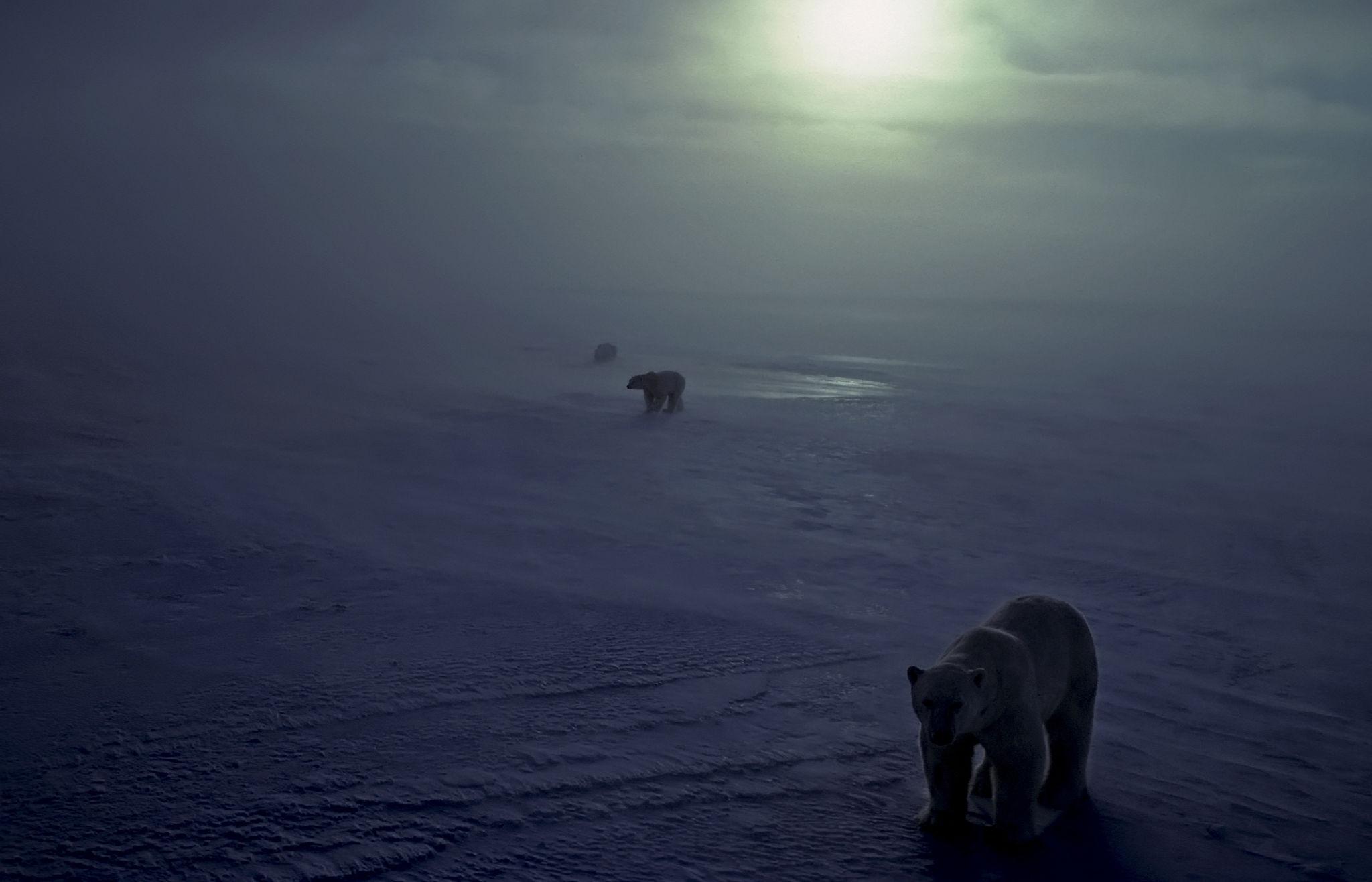
“Suppose,” he said, “you’re out on the Arctic ice thousands of years ago. You’ve got a spear. That’s it. And a polar bear—about a thousand pounds—is trailing you. That beast can run thirty miles an hour. And it doesn’t want your wallet. What’s your gambit?”
I came up with several defenses.
Climb something.
Hide.
Stand your ground.
Try to look larger than I was, which even then was not a promising strategy.
Dad shook his head at all of them.
Then he told me how the hunters of the Arctic solved the problem.
They made a narrow, flexible spike—about the length of a knitting needle—sharpened at both ends. They used the cartilage of a shark. They’d heat it just enough to bend it into a tight coil, then freeze it solid.
Out on the ice, they always carried these frozen coils with them.
And if a polar bear began to follow… the hunters would drop one behind them—an ancient little device that looked like a tightly wound spring.
The bear, curious and hungry, would sniff it and swallow it whole.
Inside the beast, the frozen coil would thaw—and snap open.
My father paused there, letting the image do its work.
“That,” he said, “is how you survive in a place where the margin for error is exactly zero.”
“Gosh,” I said.
I knew what he was going to say—and he said it, or close enough:
“So if you’re ever helpless—and someone is bent on harming you—don’t panic. Don’t freeze. And don’t rely on strength you don’t have.”
He tapped the side of his head.
“Figure a way out.”
It wasn’t just advice. It was a mindset.
You might not be stronger.
You might not be faster.
You might not even be right.
But somewhere—if you’re willing to think hard enough—there’s an answer the other fellow hasn’t considered.
I didn’t fully understand that at the time.
I was still a kid from Coronation, more concerned with avoiding oil rigs and the No Thumbs Gang than with life-or-death strategy on Arctic ice.
But the lesson stayed.
Years later, I realized my father hadn’t been talking about polar bears and the genisus of a thousand year old IUD. He was talking about everything.
