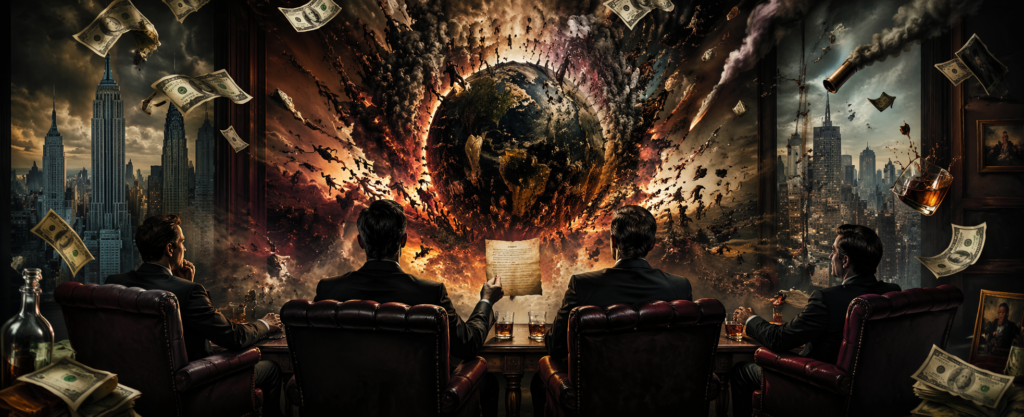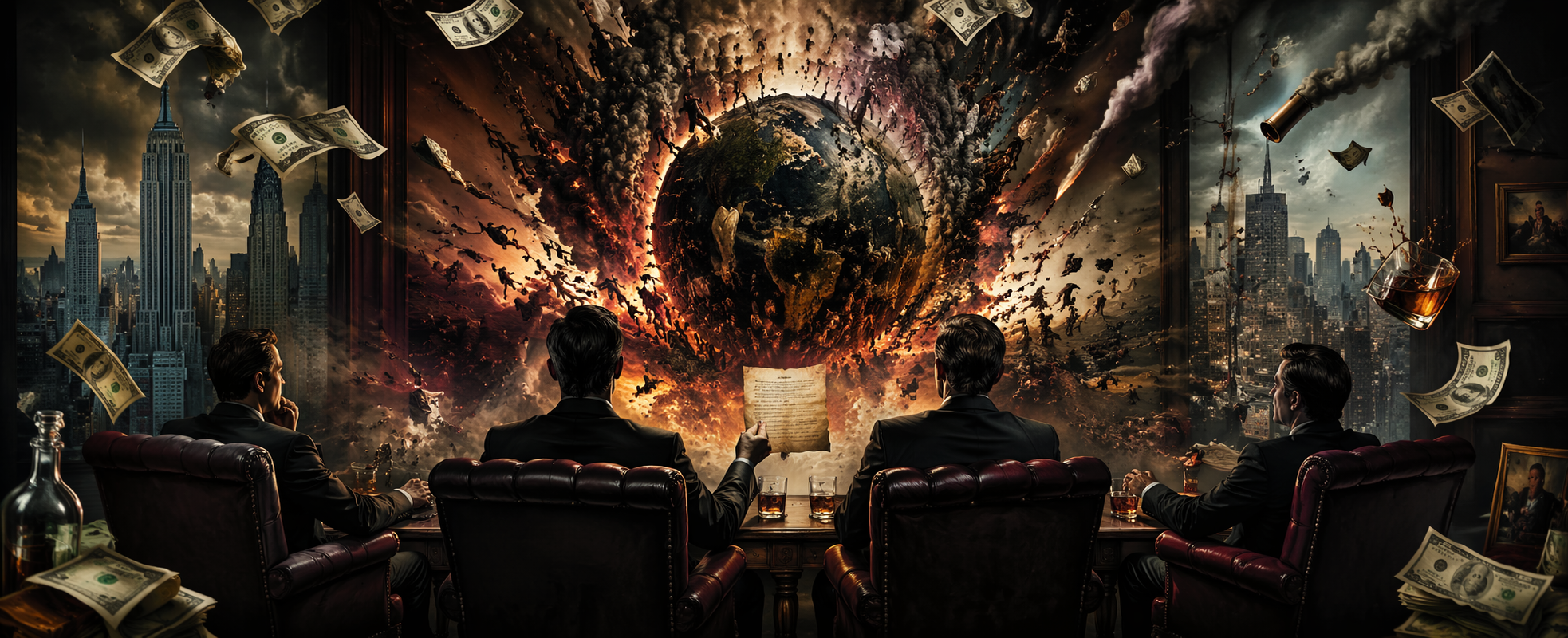
There were four brothers who were, more or less, geniuses, and they more or less hated each other.
The first time they fully understood how important they were to one another was after their father killed himself.
The brothers were known as the Loz Brothers. Loz was a strange name, and although each of them knew a great many things, none of them ever learned why their father had changed his name from Padanski to Loz when he came to America at eighteen.
The old man died the way a man with too much money, too much privacy, and too little hope might die: carbon monoxide and vodka in a parking lot beside his ten-million-dollar Manhattan co-op. Either one might have done the job eventually. Together, they showed real teamwork.
He left behind a fortune, four sons, and one sealed envelope.
The instructions were simple. The letter was to be opened exactly one year after his death. All four sons had to be present. It had to be read aloud. No one else was to hear it.
So, one year later, in the large living room of the Manhattan co-op, with Central Park glowing beyond the windows after a light rain, the brothers gathered to hear from the dead.
The oldest was Adam. Since he was firstborn, and perhaps because life has always had a weakness for alphabetical tyranny, it fell to him to read the letter.
Adam remembered a little about their mother. Mostly that she smelled of lilac. The other three remembered nothing at all.
He opened the envelope.
“Well, kids. It’s over and I’m dead.
I had a good life and never went dancing as much as I should have, but that’s life. Each of you has been fabulously wealthy since I kicked off and has been enjoying the fruits of my labor. Don’t ask where the money came from. I never did, and I was pretty happy until the last few years.
Sure, I knew I was going to die. Lung cancer nearly always wins, especially at my age, and especially after smoking most of the cigarettes I could lay my hands on.
Now I have one final request. It comes in two parts. First, I want you boys to work together. Second, here is the request:
The four of you are to devise some kind of system to destroy ninety percent of the human race. Actually, ninety-five percent would be better.”
Adam stopped reading.
No one said anything for a moment.
Then Bobby, who had used his inheritance mainly to remain busy in ways that required very little clothing, said, “Dad’s making one final joke.”
Bobby had done particularly well out of grief. Their father had arranged things so that each son received fifty thousand dollars a month, every month, like clockwork. Money arrived in the night. Taxes were handled by other people. It was the kind of arrangement that could make a man confuse good luck with character.
“Dad hated practical jokes,” said Charlie.
That was true. Their father had many flaws, but whimsy was not one of them.
David, the youngest, leaned back and said, “He did have quaint ideas.”
“Name one,” said Charlie.
“Steering us into academic fields that turned out to be almost entirely useless,” said Bobby. “I don’t know about the rest of you, but I never made a penny from my education.”
“We were never expected to work,” said Adam.
“Destroying ninety-five percent of the human race sounds like work,” Bobby said.
“A lot of work,” said Charlie.
Then Billy—who somehow had not been introduced properly despite being one of the four brothers and the family statistician—spoke in the tone of a man who had been waiting his whole life for the room to become worthy of him.
“I can understand why Dad wanted it done,” he said.
Adam looked at him. “After all, you are the family statistician. Enlighten us.”
“Human beings,” Billy said, “are a spectacularly successful organism. That is the trouble. Exponential growth. More people every year. More pressure. More crowding. More hunger. More desperation. Half the world already lives on next to nothing, and still we multiply like we’ve been promised extra seating.”
“So,” said Charlie, “you’re saying Dad wanted us to kill off most of the population in order to save the species?”
Billy shrugged.
“I’m saying it sounds like him.”
At that, the room went quiet.
Outside, the park looked fresh and civilized and entirely worth preserving. Inside, four rich brothers sat in a dead man’s apartment considering whether their father’s final wish was madness, satire, or the first honest thing he had ever said to them.
And because they were his sons, and because money often gives bad ideas the dignity of debate, none of them laughed as much as they should have.